Tech Giants Open AI Models to Government Safety Audits Before Launch
In a significant step toward voluntary AI governance, leading technology companies including Google, Microsoft, and xAI have agreed to submit unreleased versions of their artificial intelligence models to the U.S. Department of Commerce for safety evaluation. This initiative, announced by the newly formed Center for AI Standards and Innovation (CAISI), aims to ensure that advanced AI technologies do not pose risks to public safety or national security before they reach the market. Below, we explore the details of this agreement and its potential impact on the AI landscape.
Which major AI companies have committed to pre-release government safety checks?
Three prominent players in the AI industry have stepped forward: Google LLC, Microsoft Corp., and xAI (the company founded by Elon Musk). These firms have voluntarily agreed to share early, unreleased versions of their AI models with the U.S. Department of Commerce. The goal is to allow government experts to examine the models for potential dangers—such as disinformation generation, bias, or security vulnerabilities—before the models are deployed publicly. This marks a departure from the typical closed development process, where external review often happens after release.
What U.S. government body is responsible for testing these AI models?
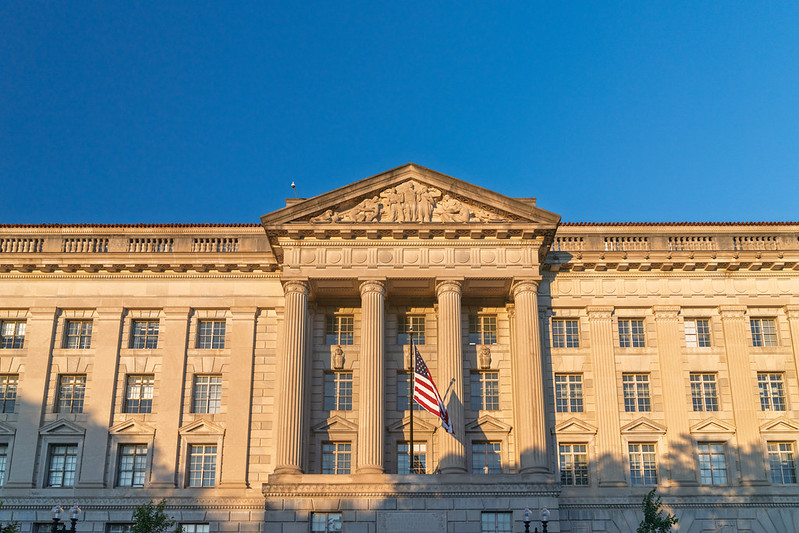
The testing will be conducted by the Center for AI Standards and Innovation (CAISI), a division within the U.S. Department of Commerce. CAISI was created to spearhead efforts around AI safety standards and innovation. In this role, it will evaluate the unreleased models from Google, Microsoft, and xAI to assess their compliance with safety guidelines and potential societal impacts. By centralizing this oversight under CAISI, the government aims to build a systematic framework for pre-release AI evaluation, rather than relying on ad hoc checks.
What is the Center for AI Standards and Innovation (CAISI) and what does it do?
The Center for AI Standards and Innovation, abbreviated as CAISI, is a unit within the Commerce Department focused on advancing responsible AI development. Its mission includes researching AI risks, developing standardized testing protocols, and collaborating with industry partners. In this agreement, CAISI will take charge of reviewing the unreleased models from Google, Microsoft, and xAI. The center will check for issues such as biased outputs, security flaws, and potential misuse. CAISI’s involvement signals a push toward preemptive regulation and alignment with the AI Safety Summit commitments made by world leaders.
Why are these companies voluntarily sharing their AI models with the government?
The decision by Google, Microsoft, and xAI is voluntary—not mandated by law. Several factors drive this cooperative stance. First, public and governmental pressure for AI safety has intensified following high-profile incidents of AI-generated misinformation and bias. Second, these companies likely see early engagement as a way to shape future regulations (e.g., influencing standards that CAISI develops). Third, pre-release testing can reduce the risk of costly recalls or reputational damage later. Finally, it aligns with broader international efforts, such as the Bletchley Declaration, where governments and tech firms pledged to manage AI risks proactively.

How will the safety testing process work and what will it evaluate?
While exact procedures are still being defined, CAISI’s testing will likely involve several stages. Experts will examine the AI models for biases in training data, adversarial vulnerabilities, and propensity to generate harmful content. They may simulate real-world scenarios, such as a user trying to elicit dangerous instructions. The evaluations will also check the models’ robustness—how well they handle unexpected inputs. The companies will provide varying levels of access (e.g., API endpoints or weight snapshots) so officials can run diagnostic tests. Feedback from CAISI will be shared with the developers, who can then refine their models before public release.
What are the broader implications of this voluntary agreement for AI regulation?
This agreement could set a precedent for the entire AI industry. If successful, it may encourage other companies (like OpenAI, Meta, or Anthropic) to adopt similar voluntary reviews. It also gives the Commerce Department a direct role in shaping AI safety without new legislation—a flexible approach in a fast-moving field. However, critics worry that voluntary measures may lack teeth, as companies could still release models despite negative test results. Nonetheless, the collaboration highlights a growing consensus: self-regulation alone is insufficient, and some degree of government oversight is necessary for high-risk AI systems. The outcomes of CAISI’s reviews will likely influence future policy debates in the U.S. and abroad.