LeafKVM: An Open Source KVM Switch Built on Rust and Buildroot
Introduction
For IT administrators and system operators, having remote access to machines regardless of their state is critical. Traditional KVM-over-IP devices provide such capabilities, but many are proprietary and expensive. Enter the LeafKVM, an open source KVM device that aims to deliver robust remote management at an affordable price. Built around a Rockchip SoC and powered by Rust, it offers a unique combination of features that appeal to both professionals and hobbyists.
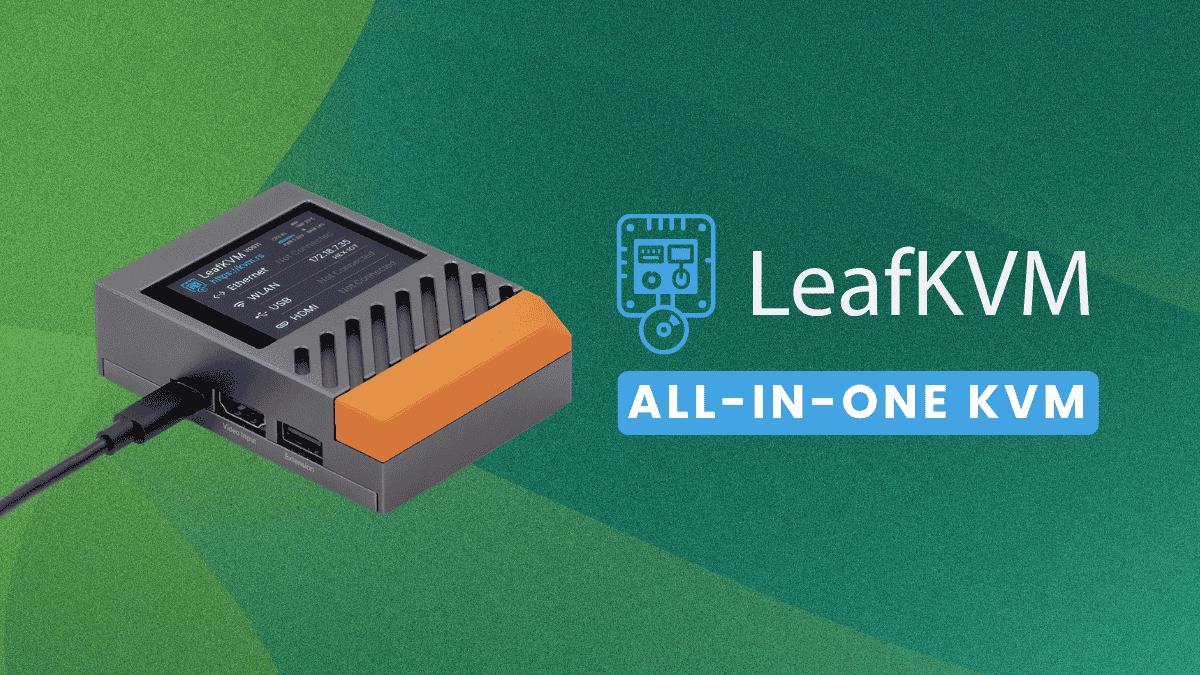
What Is LeafKVM?
A KVM (Keyboard, Video, Mouse) device allows you to control a computer from afar by capturing its video output and simulating input devices, without requiring any software on the target system. The LeafKVM is a self-contained unit that connects to a computer's HDMI output and USB ports, enabling full control via a web interface or its built-in touchscreen. It operates independently of the target's operating system, meaning it works even when the machine is in BIOS, frozen during boot, or completely offline.
Key Specifications
Housed in a CNC-milled aluminum case that also serves as a passive heatsink, the LeafKVM is both sturdy and efficient. Its core components include:
- SoC: Rockchip RV1126B with a quad-core Cortex-A53 CPU
- RAM: 512 MB DDR3
- Video capture: Lontium LT6911C CSI video bridge
- Storage: microSD slot
- Display: 2.4-inch IPS capacitive touchscreen for local configuration and status
- Ports: 1× HDMI (up to 4K@30fps), 2× USB Type-C, 1× USB Type-A
- Networking: Bluetooth, Wi-Fi 5 dual-band (433 Mbps), 100 Mbps RJ45 Ethernet with PoE (IEEE 802.3af)
- Weight: 195 g (6.9 oz)
- Dimensions: 90 × 65 × 25 mm (3.54 × 2.56 × 0.98 in)
- Power: USB Type-C (5V/1A) or PoE (37-57V)
Software and Features
The LeafKVM runs a Linux system based on Buildroot 2026.02 LTS. The backend is written in Rust, handling the video pipeline, networking, and USB emulation. The touchscreen interface uses Slint, while the web frontend is a GPL-2.0 fork of the JetKVM project. Key software features include:
- OTA firmware updates via the web dashboard
- Tailscale VPN integration for secure remote access
- Plug-and-play USB emulation as standard keyboard, mouse, and mass storage device – compatible with Linux, Windows, macOS, BSD, and BIOS/UEFI
- Configurable network settings, HDMI preview, and device status from the touchscreen
Who Is It For?
The primary audience is IT engineers and server operators who need hands-off management after a one-time physical setup. However, the device is also valuable for:

- Robotics and embedded developers working with headless hardware – eliminates the need to carry a monitor and keyboard to remote locations.
- Camera operators and videographers – the LeafKVM can stream HDMI video with under 100 ms latency at up to 4K/30fps or 1080p/90fps, serving as a wireless video relay for remote previewing on tablets or laptops.
Performance and Use Cases
By presenting itself as a standard USB device, the LeafKVM requires no drivers on the target machine – simply connect and start using it. The low-latency video capture ensures a responsive remote experience, even for tasks like BIOS configuration or boot troubleshooting. Its compact size and PoE support make it easy to deploy in server racks or embedded environments.
Pricing and Availability
The LeafKVM is priced at $119 and is available for backing on Crowd Supply. Shipping is free for U.S. backers; international shipping costs apply. Units are expected to ship by mid-January 2027 if the funding goal is met.
Conclusion
With its open source design, Rust-powered efficiency, and affordable price, the LeafKVM represents a compelling option for anyone needing remote KVM access. Whether you're managing servers, debugging embedded systems, or extending your video monitoring capabilities, this device offers a versatile and cost-effective solution.