How to Scale Your Procurement Expertise Using Trusted AI Agents
Introduction
Imagine being a senior procurement manager responsible for evaluating suppliers across thousands of vendors. You excel at judging delivery trends, quality incidents, contract renewals, and even subtle signals like a plant manager who habitually overstates defects. But when your company has 2,000 suppliers and you can only deeply assess 200, you risk missing red flags that could cost millions. This is where trusted AI agents step in—they can emulate your expert decision-making process and scale it across the entire supplier base. This guide walks you through the steps to build and deploy an AI agent that leverages your unique business expertise, transforming how you manage supplier requalification and risk.
What You Need
- Access to structured supplier data – e.g., delivery performance records, quality incident logs, contract renewal dates.
- Historical decision records – past requalification outcomes (e.g., which suppliers were requalified and why).
- Unstructured soft signals – notes from conversations, emails, or CRM entries that capture subjective observations.
- An AI platform or tool – capable of supervised learning and natural language processing (e.g., a custom machine learning model or a licensed AI agent framework).
- Domain expert time – at least one senior procurement manager to train and validate the AI.
- Data privacy and security protocols – to protect sensitive supplier information.
Step-by-Step Guide
Step 1: Define Your Supplier Evaluation Criteria
Start by listing the explicit factors you already use. For the example procurement manager, these include: delivery trend (on-time versus late), open quality incidents (type and frequency), upcoming contract renewals (timing and terms), and supplier risk level. Write them down in a spreadsheet or document. But don’t stop there—also capture the implicit criteria that influence your gut feeling. For instance, “Plant A’s manager often inflates defect counts, so a small spike is less concerning than for Plant B.” This step ensures your AI agent learns the full picture.
Step 2: Collect and Digitize Soft Signals
Soft signals are the unspoken cues that experts rely on. In the original example, the manager knows which plant manager overstates a defect and which one underreports. To scale this, you need to digitize these insights. Gather emails, meeting notes, performance review comments, and even call logs. Use natural language processing to extract patterns like: “always overstates” or “underreports defect severity”. Create a structured dataset where each supplier gets a “soft signal score” based on these observations. This is the secret sauce that makes your AI agent trusted—it mirrors your human intuition.
Step 3: Train Your AI Agent on Expert Decisions
Now that you have both hard data (delivery trends, incident counts) and soft signals (manager reliability scores), you can train a supervised learning model. Use historical requalification decisions as your target variable (e.g., “requalify” or “do not requalify”). Split your data into training and testing sets (e.g., 80/20). For each supplier in the training set, feed in the features you defined in Step 1 plus the soft signal metrics from Step 2. The AI learns the weight each factor carries in your decision. A good initial model will predict with 80–90% accuracy on your historical data. Validate by asking the expert to review borderline cases.
Step 4: Deploy the AI Agent to Evaluate All Suppliers
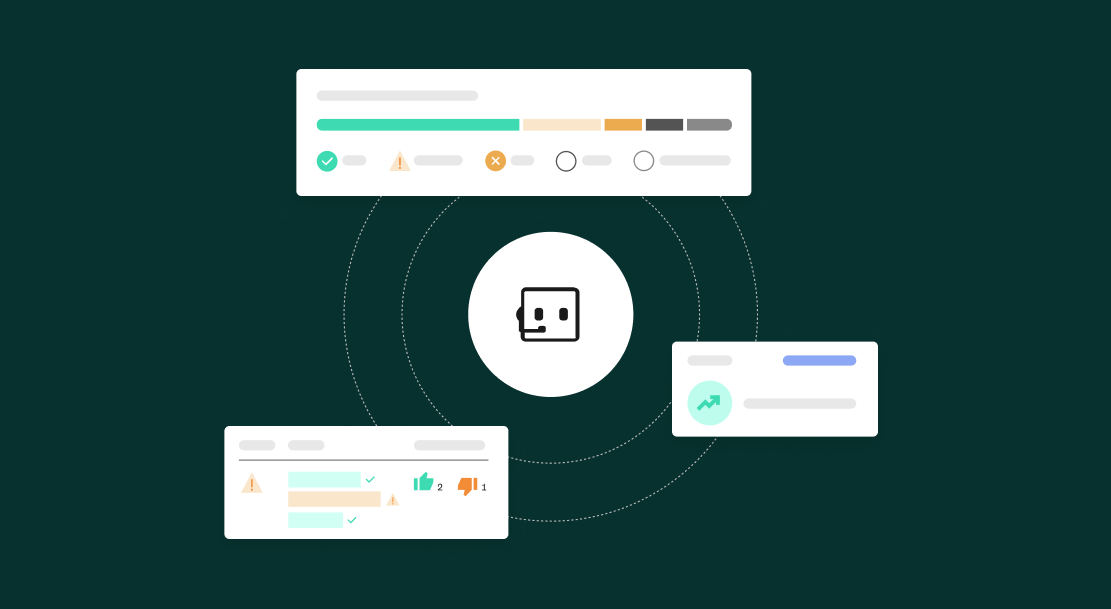
Once trained, your AI agent can process the full list of 2,000 suppliers in minutes. Configure it to output a “requalification priority score” for each supplier. Use a traffic-light system: green (no action needed), yellow (monitor), red (requalify now). The AI should also provide a brief explanation—like “high delivery trend risk combined with soft signal of underreporting.” This transparency builds trust. Start by reviewing the top 100 red-flagged suppliers with your expert team. Over time, you’ll find that the AI catches patterns you might have missed across the long tail of vendors.
Step 5: Continuously Validate and Refine the AI
Your expertise isn’t static, and neither should your AI be. Set a quarterly review cycle where you compare the AI’s recommendations with actual decisions made by human experts. Note any false positives or false negatives. Update the training dataset with new decisions and additional soft signals. For example, if you discover a new supplier “always hides delivery delays,” add that signal to the model. Retrain the AI every six months or whenever major process changes occur. This iterative loop ensures your AI agent remains a trusted extension of your knowledge, not a static rulebook.
Tips for Success
- Start small, scale gradually. Pilot the AI on a subset of 100 suppliers before rolling out to 2,000. This lets you catch issues early and builds stakeholder confidence.
- Involve multiple domain experts. If possible, have two or three procurement managers contribute to the training set. Their combined wisdom reduces individual bias.
- Maintain an audit trail. Log every AI recommendation and the human override decision. This helps in case of disputes or regulatory audits.
- Never fully automate without oversight. The AI agent is a tool to augment your expertise, not replace it. Always have a human in the loop for high-risk decisions.
- Document your soft signals. What one expert considers “overstating defects” may differ from another. Create a clear, standardized definition so the AI interprets them consistently.
- Communicate the value to your team. Explain that the AI frees them from manual data crunching, allowing more time for strategic supplier relationships. This reduces resistance and increases adoption.
By following these steps, you transform your personal expertise into a scalable, trusted AI system. The senior procurement manager who could only evaluate 200 suppliers now effectively handles 2,000. The result? Better risk detection, faster requalification decisions, and a procurement function that leverages human insight at machine speed.