How to Prepare Your Commercial Building for Surging Data Center Server Energy Demand
Introduction
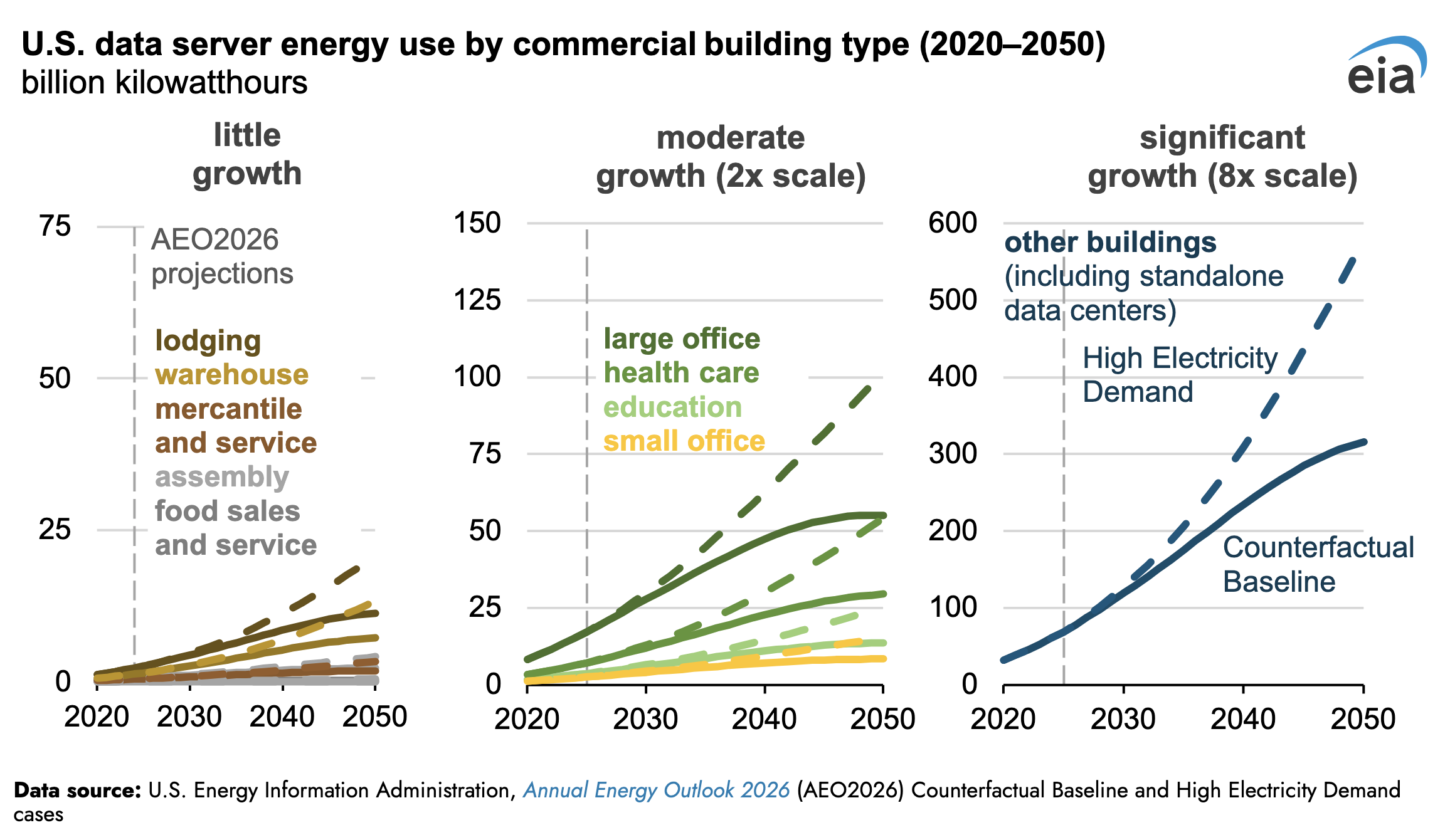
The Annual Energy Outlook 2026 (AEO2026) projects a dramatic rise in electricity consumed by data center servers across the commercial building stock. By 2050, server consumption alone could reach between 446 billion kilowatthours (BkWh) and 818 BkWh, with standalone data centers growing faster than all other data center rooms combined. This How-To guide helps building owners, facility managers, and energy planners understand the trend and take actionable steps to assess, manage, and mitigate the energy impact on their commercial properties.
What You Need
- Access to the AEO2026 report (available from the U.S. Energy Information Administration)
- Building floor plans and electrical system documentation
- Energy audit tools (power meters, monitoring software)
- Data on existing server loads and IT equipment inventory
- Energy efficiency benchmarks and case studies
- Budget for potential upgrades (energy-efficient servers, cooling systems, power distribution units)
Steps
Step 1: Review the Latest AEO Projections
Start by obtaining the AEO2026 report and focusing on the data center server consumption projections. Pay attention to the two scenarios: the low-end (446 BkWh) and high-end (818 BkWh) by 2050. Understand that standalone data centers are expected to contribute the majority of the growth. This step provides the context for why action is needed now—delaying could lead to higher costs and infrastructure strain. Note the timeline (2026–2050) to set realistic planning horizons.
Step 2: Classify Your Data Center Spaces
Audit your commercial building to identify all areas housing servers. Distinguish between standalone data centers (dedicated facilities) and data center rooms (shared spaces like server closets or small rooms). This classification is critical because the AEO2026 shows different growth rates; standalone centers have higher energy intensity. For each space, record total square footage, number of servers, and current power usage. Create a simple inventory table to track these metrics.
Step 3: Conduct an Energy Baseline Audit
Measure the current electricity consumption of your data center servers. Use power meters at the rack or device level, or integrate with building management systems (BMS) that track sub-meters. Record data over a full week to capture peak and off-peak loads. Calculate the Power Usage Effectiveness (PUE) if possible—this ratio of total facility energy to IT equipment energy helps gauge efficiency. A baseline will allow you to compare future improvements and estimate potential savings.
Step 4: Implement Efficiency Upgrades
Target the biggest energy consumers first. Upgrade to high-efficiency servers (look for ENERGY STAR or similar certifications), consolidate virtual machines to reduce physical hardware, and optimize cooling systems (e.g., raising set points, using hot/cold aisle containment). For standalone data centers, consider advanced cooling like liquid cooling or free air cooling when climate permits. For smaller server rooms, improve airflow management and seal gaps. Document each upgrade and its expected energy reduction.
Step 5: Plan for Scalable Power Infrastructure
Given the projected growth, ensure your building’s electrical system can handle increased loads. Work with an electrical engineer to assess transformer capacity, backup generators, and uninterruptible power supplies (UPS). Plan for modular expansions that can be added as server demand grows. Consider on-site renewable energy (solar PV) or purchasing green power to offset the rising consumption. Also evaluate the feasibility of battery storage to manage peak demand charges.
Step 6: Monitor and Adjust Long-Term
Set up a continuous monitoring system that tracks server energy use, PUE, and overall building energy intensity. Establish key performance indicators (KPIs) and review them quarterly. Compare your actual consumption against the AEO2026 projections to detect deviations early. Adjust your efficiency plan as new technologies or policies emerge. Engage with utility incentive programs that reward demand reduction. Finally, share your findings with stakeholders to secure ongoing support for energy management.
Tips
- Start small: Focus on the low-hanging fruit—server virtualization and cooling optimization often yield quick wins.
- Collaborate with IT teams: Server energy management requires coordination between facilities and IT. Involve them in planning upgrades and monitoring.
- Stay informed: The AEO is updated annually. Revisit the projections each year to refine your strategies.
- Consider total cost of ownership (TCO): Energy-efficient servers may have higher upfront costs but lower operating expenses over their lifespan.
- Use the PUE metric: Aim for a PUE below 1.5 for standalone data centers; for smaller rooms, target under 2.0.
- Explore funding: Look for government grants, utility rebates, or Energy Service Company (ESCO) contracts to finance upgrades.
By following these steps, you can prepare your commercial building for the projected growth in data center server energy demand, reduce operational costs, and contribute to a more sustainable energy future.