Cloudflare's Innovative Infrastructure for Large Language Models: A Q&A
Cloudflare has made a significant advancement in AI infrastructure by optimizing its global network to run large language models (LLMs) more efficiently. Traditional hardware bottlenecks and high costs are addressed through a clever separation of input processing and output generation. This Q&A explores the details and implications of this new approach.
What specific infrastructure did Cloudflare announce for running LLMs?
Cloudflare introduced a dedicated, high-performance infrastructure designed to run large AI language models across its global network. Recognizing that LLMs demand costly hardware and handle massive volumes of text data, the company innovated by splitting the model's workload. Input processing—where the model analyzes and understands the user's query—is handled by one optimized system, while output generation—the step where the model produces its response—runs on a different, equally optimized system. This separation allows each phase to benefit from hardware tailored to its specific computational needs, reducing latency and improving throughput. By leveraging its extensive edge network, Cloudflare can deploy these systems closer to users, minimizing data travel and further enhancing performance.
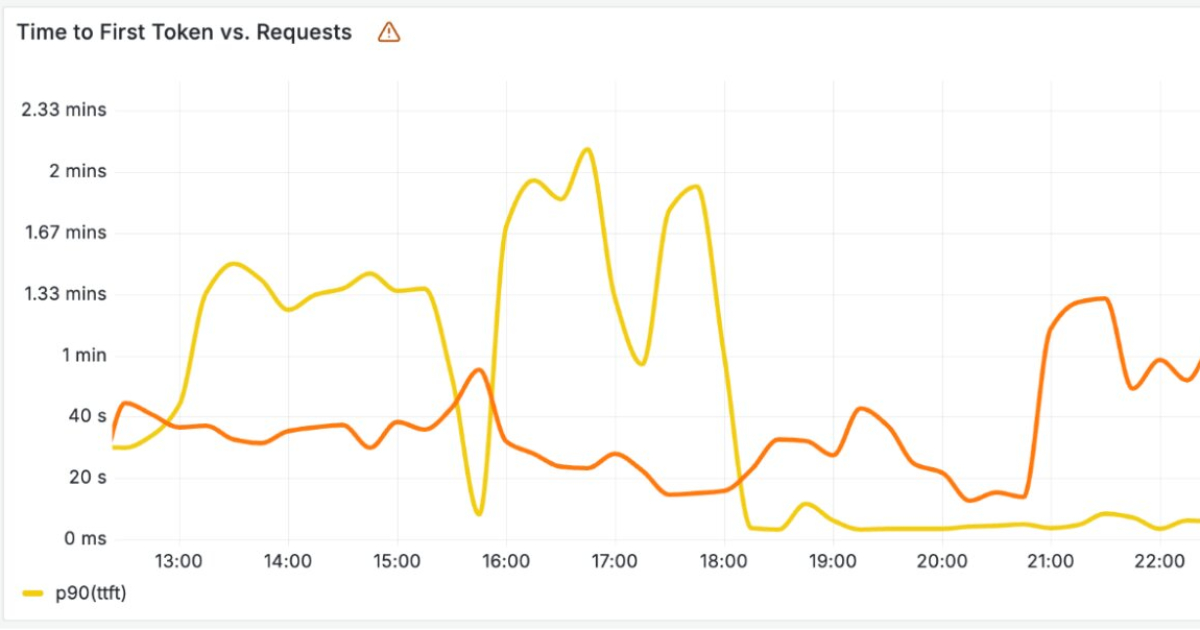
Why did Cloudflare separate input processing and output generation for LLMs?
The separation addresses fundamental challenges in running LLMs at scale. Input processing involves heavy matrix operations and attention mechanisms that require high-bandwidth memory and parallel processing, while output generation is more sequential and dependent on low-latency token prediction. By decoupling these stages, Cloudflare can optimize each with the right hardware—for example, using powerful GPUs or specialized accelerators for input and more cost-effective, latency-optimized chips for output. This avoids the inefficiency of a one-size-fits-all approach, where one part of the pipeline becomes a bottleneck. The result is a more balanced system that reduces overall response time and increases the number of concurrent users that can be supported without degradation.
How does Cloudflare's global network enhance LLM performance?
Cloudflare's edge network, spanning over 300 cities worldwide, allows LLM inference to occur close to the end user. By deploying separate input/output systems across multiple data centers, the company can route requests to the nearest available node, drastically cutting down network latency. Additionally, the distributed nature means that regional spikes in demand can be absorbed by adjacent nodes without overwhelming a central server. This geographic spreading also improves resilience; if one node fails, others can instantly take over. For LLMs, which often require real-time or near-real-time responses, this global infrastructure is critical for delivering a smooth user experience, especially for applications like chatbots, translation, or content generation.
What hardware does Cloudflare use for these optimized systems?
Cloudflare has not disclosed every detail, but the new infrastructure leverages a mix of custom and off-the-shelf hardware. For input processing, which is compute-intensive and memory-bound, they likely utilize high-end GPUs (e.g., NVIDIA A100 or H100) or specialized TPUs with large VRAM. For output generation, which is more latency-sensitive and less memory-demanding, they may use purpose-built accelerators or even CPUs with optimized software stacks. The key is that each system is selected for its strengths: one for massive parallelism, the other for quick sequential token generation. Cloudflare also integrates these with its own edge computing nodes, ensuring low-latency data transfer between stages and local caching to reduce redundant computation.
/presentations/game-vr-flat-screens/en/smallimage/thumbnail-1775637585504.jpg)
What are the key benefits of Cloudflare's approach for AI developers and users?
For AI developers, the infrastructure offers a scalable, cost-effective platform to deploy large models without needing to manage their own hardware. The separation of concerns means they can fine-tune each stage independently, potentially reducing inference costs by up to 30-40% compared to monolithic deployments. For end users, the benefits include faster response times, better reliability, and support for more concurrent requests. Cloudflare's global network also ensures consistent performance worldwide, even for users in regions far from major cloud data centers. This democratizes access to advanced LLMs, enabling small businesses and startups to leverage powerful AI without huge upfront investments. Security is another plus, as data can be processed and stored at the edge, reducing exposure to central servers.
How does this compare to traditional LLM deployment methods?
Traditionally, LLMs are deployed on clusters of GPUs in centralized cloud data centers. This leads to high latency for distant users, single points of failure, and often wasted resources because the hardware is underutilized during the output generation phase. Cloudflare's distributed, optimized approach flips this model. By separating input and output, resources are used more efficiently, and by placing them at the edge, latency drops dramatically. Moreover, traditional methods require manual scaling, while Cloudflare's network dynamically balances load across thousands of nodes. This is akin to the shift from centralized computing to CDNs—but for AI inference. It represents a paradigm shift that could make LLMs faster, cheaper, and more accessible.