How to Understand the Discovery That Time Has a Subtle Blur
Introduction
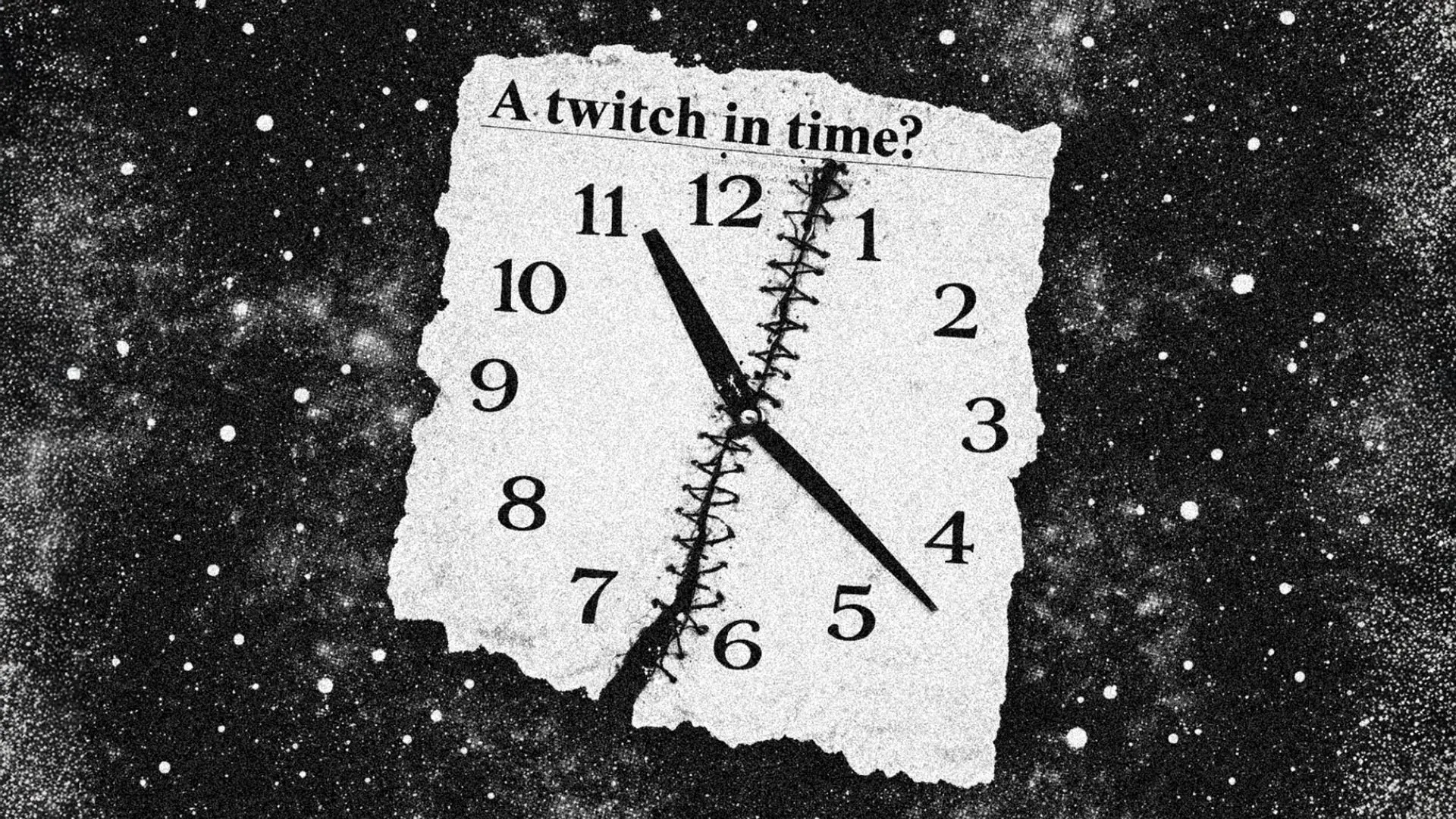
Physicists have long grappled with one of quantum mechanics' greatest puzzles: how do fuzzy, probability-laden possibilities transform into a single, definite reality? A new study suggests that spontaneous 'collapse' processes—possibly tied to gravity—could introduce a minuscule blur into time itself. While this won't affect your wristwatch, it reveals a fundamental limit to how precisely we can ever measure time. This guide will walk you through the key steps to grasp this breakthrough and its implications for unifying quantum physics with gravity.
What You Need
- Basic knowledge of quantum mechanics (superposition, wavefunction, measurement).
- Familiarity with the concept of time as a continuous, precise quantity in classical physics.
- An interest in theoretical physics and the quest for a quantum theory of gravity.
- No advanced math required—this guide focuses on conceptual understanding.
Step-by-Step Guide
Step 1: Recognize the Core Quantum Puzzle
Quantum mechanics describes the microscopic world using wavefunctions—mathematical objects that encode probabilities. Before measurement, particles exist in multiple states at once (superposition). But when we observe, we always see a single outcome. This 'measurement problem' is the fuzzy-possibilities-to-definite-reality puzzle. Understand that this is not a flaw in theory; it's a deep question about how reality emerges. The new research addresses this by proposing that collapse happens spontaneously, without requiring an observer.
Step 2: Explore Spontaneous Collapse Processes
Spontaneous collapse models modify quantum mechanics by adding a random, physical process that causes wavefunctions to 'collapse' at a certain rate. For example, the Ghirardi-Rimini-Weber (GRW) theory suggests that each particle experiences a spontaneous localization event every 100 million years or so. In the new study, researchers link these collapse events to gravity. Remember: gravity is incredibly weak at quantum scales, but it might still play a role in shaping reality.
Step 3: Connect Collapse to the Nature of Time
Under the proposed model, each spontaneous collapse introduces a tiny, random disturbance in the fabric of spacetime—similar to a mini gravitational wave. Because time is interwoven with space in Einstein's relativity, these disturbances effectively 'blur' time itself. The researchers calculated that the effect is so small that it would take billions of years for the blur to accumulate to even a single second of uncertainty. Imagine time as a perfectly sharp photograph slowly becoming slightly out of focus over cosmic timescales.
Step 4: Understand the Implication for Precision
This blur sets a fundamental limit on time measurement. Even with perfect clocks, you could never measure time intervals shorter than the typical spacing between collapse events for a given system. For regular clocks (atomic, quartz, etc.), this limit is far beyond current accuracy—so our everyday timekeeping is safe. But for experiments probing the quantum realm, this hidden limit could become relevant. Note: This is not a technical limitation but a built-in feature of reality.
Step 5: See the Path to Quantum Gravity
The link between collapse and gravity provides a fertile testing ground for theories that unite quantum mechanics and general relativity. If spontaneous collapse is indeed gravitational in origin, then studying time's blur might reveal how gravity behaves at the smallest scales. The new findings offer a concrete prediction: the blur should be measurable in future ultra-precise experiments, such as using entangled atoms or Bose-Einstein condensates. This is exciting because it turns an abstract puzzle into a testable hypothesis.
Step 6: Reflect on What This Means for Reality
Finally, step back and consider the bigger picture. If time is subtly fuzzy, then the distinction between past, present, and future may be less rigid than we thought. The research does not claim that time is an illusion, but rather that our classical notion of a perfectly flowing timeline might be an approximation. Embrace the nuance: This is not a crack in the fabric of spacetime, but a tiny window into a deeper structure.
Tips for Further Understanding
- Read the original paper: Look for the study published in Physical Review Letters (2024) by the team behind this research.
- Watch explanatory videos: Channels like PBS Spacetime and Sixty Symbols have excellent primers on wavefunction collapse.
- Discuss with peers: Engage in forums like Physics Stack Exchange or Reddit's r/Physics to clarify doubts.
- Avoid common misconceptions: The blur does not mean time travel is possible, nor does it invalidate relativity. It's a subtle effect at the quantum-gravity interface.
- Stay updated: This is an active area of research; new experiments may soon test these predictions.