How Cloudflare Optimizes Its Global Network for Large Language Models
Cloudflare, a leading content delivery network, has introduced new infrastructure specifically designed to run large AI language models. Traditional infrastructure often struggles with the high costs and heavy data demands of these models. In this Q&A, we explore how Cloudflare handles these challenges by splitting processing tasks across its global network.
What new infrastructure has Cloudflare announced for AI language models?
Cloudflare recently unveiled a novel system architecture optimized to host and execute large language models (LLMs) on its global network. This infrastructure is tailored for the unique requirements of LLMs, which involve processing vast amounts of text both as input and output. By leveraging its distributed edge network, Cloudflare can reduce latency and improve efficiency. The key innovation is the separation of input processing and output generation onto distinct, specialized systems. This allows each stage to be handled by hardware best suited to its demands, ultimately lowering costs and speeding up performance.
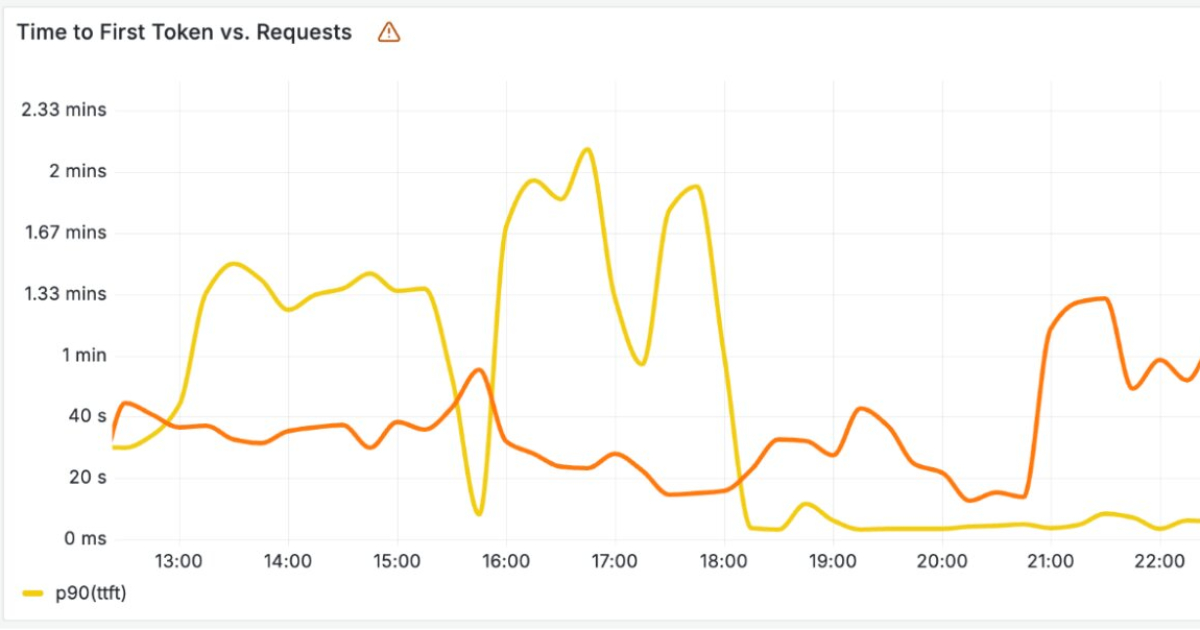
Why do large language models demand specialized infrastructure?
Large language models require substantial computational resources because they process massive volumes of textual data. They rely on costly hardware, such as high-end GPUs, to handle both the encoding of input prompts and the decoding of output responses. These two stages have different computational profiles: input processing is often memory-bound, while output generation is compute-bound. Without separation, a single system becomes a bottleneck, wasting resources and increasing latency. Cloudflare’s approach addresses these challenges by tailoring the infrastructure to each stage, ensuring efficient use of hardware and faster response times for users.
How does Cloudflare separate input processing and output generation?
Cloudflare implements a dual-system approach: one system is optimized for receiving and encoding incoming text (input processing), and another is fine-tuned for generating and streaming outgoing text (output generation). This separation allows the company to use different hardware configurations for each task. For example, systems handling input can prioritize memory bandwidth to quickly embed large prompts, while systems managing output can focus on high-throughput computation to produce tokens rapidly. By distributing these tasks across its global edge network, Cloudflare can also route requests to the nearest optimal hardware, reducing network latency.
What benefits does separating input and output provide?
Splitting input and output processing offers several advantages. First, it significantly reduces the cost of hardware, as each system can be purpose-built rather than over-provisioned for all tasks. Second, it improves performance: input processing can start immediately without waiting for output resources, and output generation can proceed at full speed without input tasks competing for the same compute. Third, it enhances scalability; Cloudflare can independently scale the systems handling inputs and outputs based on demand patterns. Finally, users experience lower latency and more consistent response times, making the models feel more responsive.
/presentations/game-vr-flat-screens/en/smallimage/thumbnail-1775637585504.jpg)
How does Cloudflare’s global network contribute to running LLMs?
Cloudflare’s global network is fundamental to its LLM infrastructure. The company operates data centers in hundreds of cities worldwide, allowing it to place computing resources close to end users. For LLMs, this proximity minimizes the distance data must travel, reducing latency for both sending prompts and receiving responses. Additionally, the network enables intelligent routing: input processing can be handled at a nearby edge location, while output generation might leverage a different, more powerful node elsewhere. This distributed architecture also provides redundancy and load balancing, ensuring high availability even during traffic spikes.
What hardware considerations are involved in running LLMs on Cloudflare?
Running LLMs requires substantial GPU power, but Cloudflare’s optimized infrastructure uses different hardware types for each stage. Input processing benefits from systems with large memory bandwidth to quickly handle token embeddings, while output generation relies on high-performance GPUs for autoregressive decoding. By decoupling these tasks, Cloudflare can invest in specialized hardware—such as GPUs with high memory capacity for input or GPUs with fast tensor cores for output—without needing to equip every node identically. This specialization reduces overall capital expenditure while maintaining top-tier performance. The company also utilizes its own custom networking to ensure fast data transfer between processing stages.