Reducing the Genetic Alphabet: Can Life Do With Fewer Than 20 Amino Acids?
Introduction
The genetic code is often described as the universal language of life. With only minor variations, all organisms—from bacteria to blue whales—use the same set of three-letter DNA "words" (codons) to specify the same 20 amino acids. This remarkable consistency has led scientists to believe that the code was fully formed in the last common ancestor of all life on Earth. But how did this code originate? And could it work with fewer building blocks? A team from Columbia and Harvard recently tested this by attempting to remove one of the 20 standard amino acids—isoleucine—from a critical part of the cellular machinery.
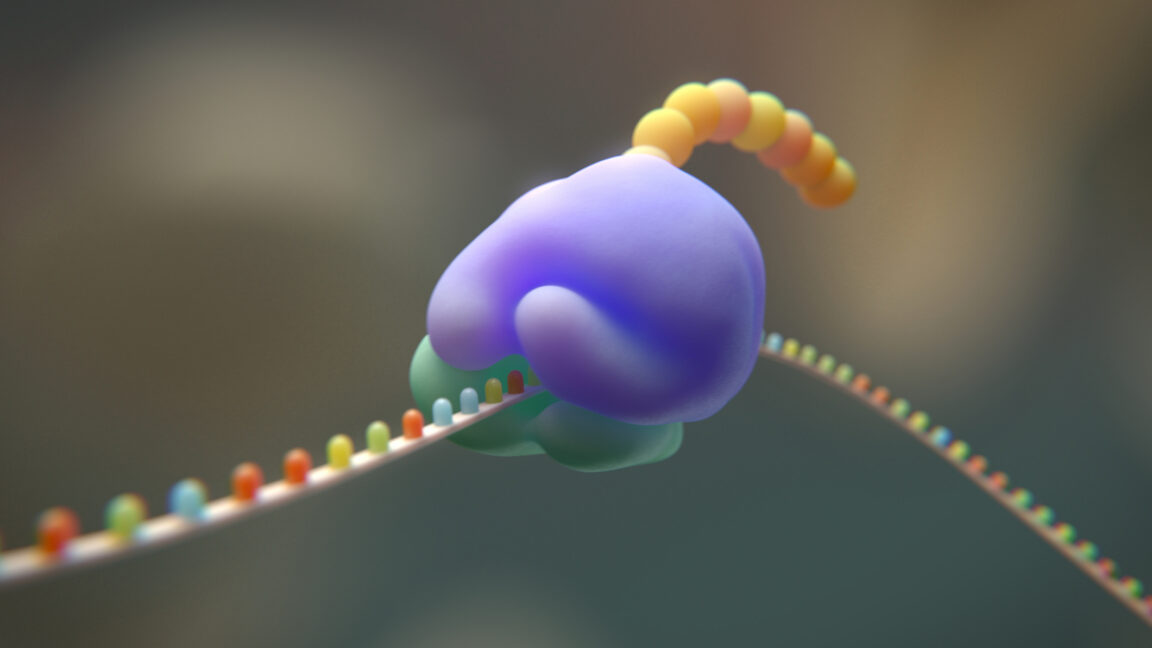
The Universal Genetic Code
The genetic code is the set of rules by which information encoded in DNA (or RNA) is translated into proteins. Each codon—a sequence of three nucleotides—corresponds to a specific amino acid or a stop signal. With 64 possible codons and only 20 amino acids (plus stop signals), the code is redundant: most amino acids are specified by more than one codon. This system is nearly universal, hinting at its ancient origin.
Researchers have long speculated that early life forms used a simpler, partial genetic code with fewer amino acids. The idea is that the code evolved over time, adding new amino acids as life became more complex. To test this hypothesis, scientists need to see if a modern organism can function with a reduced set of amino acids.
Evolutionary Hypotheses
Several hypotheses suggest that the earliest proteins were made from a small subset of amino acids. For example, the coevolution theory proposes that amino acids were added to the code as new biosynthetic pathways emerged. Another idea, the stereochemical theory, suggests that certain amino acids were favored due to their chemical properties. These theories remain speculative because we lack direct evidence from ancient cells.
To experimentally probe these ideas, the Columbia-Harvard team took a radical approach: they tried to delete one of the 20 standard amino acids from the genetic code of a living system. Their target was isoleucine (Ile), a hydrophobic amino acid essential for protein structure and function.
The Experiment: Removing Isoleucine
Why Target Isoleucine?
Isoleucine is one of the nine essential amino acids that humans must obtain from diet. In proteins, it plays a key role in forming hydrophobic cores, stabilizing three-dimensional shapes. Removing it entirely would likely be lethal, so the team focused on a specific region: the ribosome, the molecular machine that synthesizes proteins.
Engineering the Ribosome
The ribosome itself is made of RNA and proteins. Some of its protein components contain isoleucine. The researchers engineered a variant of the ribosome in which a critical isoleucine residue was replaced—effectively operating without that amino acid in that location. This was a proof-of-concept: if the ribosome could still function, it would show that the genetic code can be 'shrunk' at least in a limited context.
Results and Observations
The engineered ribosome maintained partial activity, albeit with reduced efficiency. This suggests that life can adapt to a missing amino acid, at least in a single protein position. However, the team did not attempt to remove isoleucine from the entire organism—only from one specific spot. The broader question—could an organism live with only 19 amino acids?—remains open.
Implications and Future Directions
Testing Evolution
This work provides experimental support for the idea that the genetic code could have evolved stepwise. If a modern ribosome can tolerate the loss of an amino acid, early ribosomes might have functioned with fewer. The team plans to extend this approach to other amino acids and larger parts of the cellular machinery.
Practical Applications
Beyond evolutionary biology, the ability to reduce the genetic code has biotechnological potential. By freeing up codons, researchers could incorporate non-standard amino acids with novel chemical properties—useful for creating new materials, drugs, or bio-orthogonal reactions. The current work is a first step toward a fully recoded organism.
Conclusion
The Columbia-Harvard study demonstrates that the genetic code may not be as rigid as once thought. By engineering a ribosome to work without an essential amino acid, they have opened the door to exploring alternative genetic systems. While we are far from creating organisms with 19-amino-acid codes, this research illuminates the path of evolution and expands the toolkit for synthetic biology.
Reference: Original article available on arstechnica.com. This rewrite uses different wording and structure while preserving all facts.