How to Uncover the Secrets of Spiral Galaxies: A Step-by-Step Guide Using Hubble's View of NGC 3137
Overview
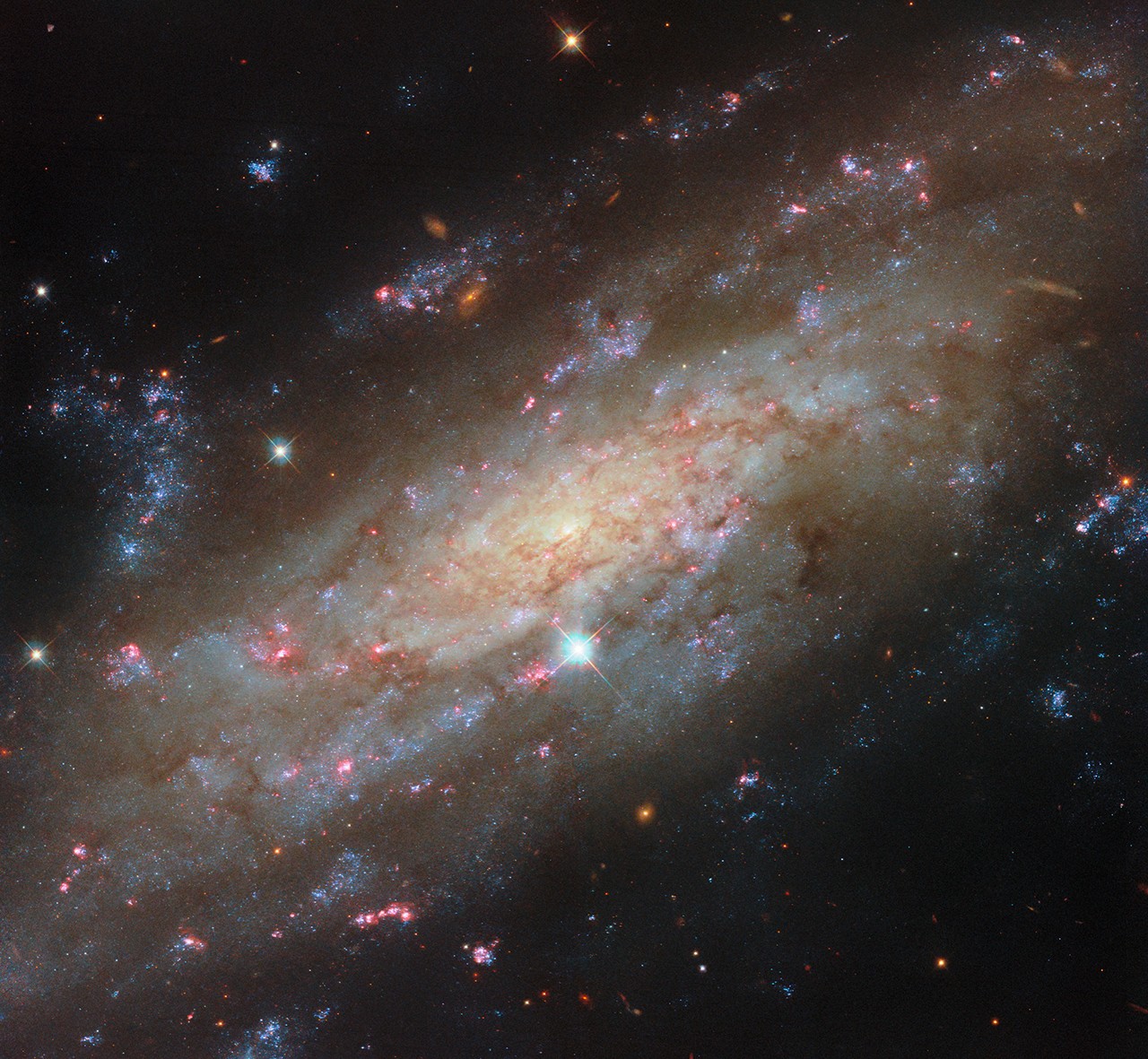
Spiral galaxies are cosmic laboratories for understanding stellar life cycles and galactic evolution. This tutorial uses NGC 3137—a stunning spiral galaxy 53 million light-years away in the constellation Antlia—as a case study. With data from the Hubble Space Telescope, you'll learn how astronomers analyze the structure, environment, and black hole of such galaxies. By the end, you'll be able to interpret Hubble images and understand the key steps in galactic research.
Prerequisites
- Basic knowledge of astronomy terms (galaxy types, light-years, black holes).
- Familiarity with image processing concepts (filters, color composites).
- Access to a web browser for exploring the Hubble Legacy Archive or NASA images.
- Optional: Image analysis software (e.g., ImageJ or Python with
astropy) for hands-on exercises.
Step-by-Step Instructions
1. Identify the Galaxy and Its Position
Start by locating NGC 3137 in the sky. It lies in the southern constellation Antlia (the Air Pump). Use online sky maps or the NASA/IPAC Extragalactic Database (NED) to confirm coordinates: Right Ascension ~10h 10m, Declination ~-29° 10'. This step reinforces the importance of accurate positioning for follow-up observations.
2. Understand Its Galactic Environment
NGC 3137 is not isolated—it belongs to the NGC 3175 Group, a small collection of galaxies thought to resemble our own Local Group. The group contains two large spirals (NGC 3137 and NGC 3175) plus many dwarf galaxies. Researchers have identified over 500 dwarf galaxy candidates in this group. Compare this with the Local Group, where the Milky Way and Andromeda dominate. To analyze this:
- Plot the group's members using a catalog like HyperLeda.
- Measure distances via redshift or surface brightness fluctuations.
- Estimate the total mass of the group from velocity dispersion of member galaxies.
3. Analyze the Spiral Structure
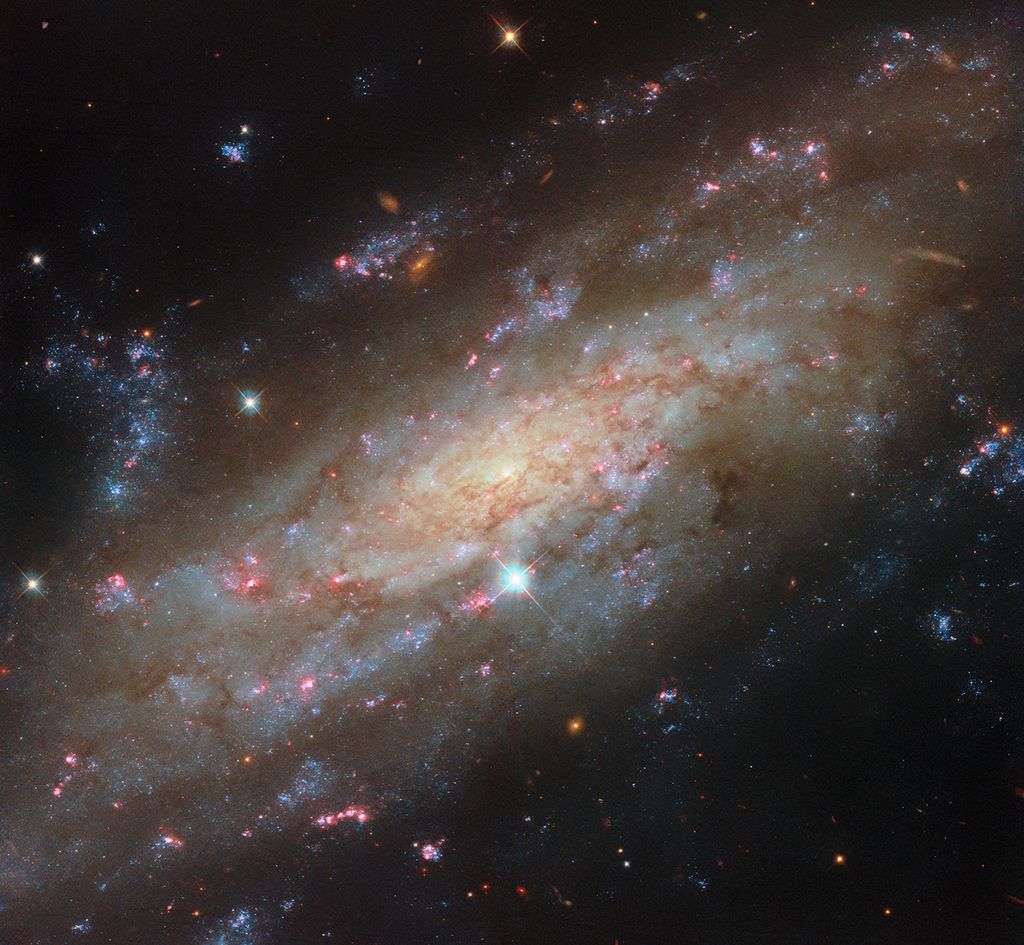
NGC 3137 is seen nearly edge-on (highly inclined), giving a unique view of its feathery spiral arms. In Hubble's image, note the network of dust lanes and bright star clusters. To quantify structure:
- Download the multi-band FITS files from the Hubble Legacy Archive (filters: F336W, F438W, F555W, F625W, F775W, F814W for optical and near-infrared).
- Use Python with
astroqueryandphotutilsto measure surface brightness profiles. - Fit a spiral arm model (e.g., logarithmic spiral) to the pitch angle. Typical values for NGC 3137 are around 15-20° from edge-on datasets.
4. Estimate the Black Hole Mass
The galaxy's center hosts a supermassive black hole of about 60 million solar masses. How is this measured? Use the M–sigma relation (black hole mass vs. stellar velocity dispersion). Steps:
- Extract a spectrum near the nucleus using STIS (Hubble's Spectrograph) archival data.
- Measure the velocity dispersion (sigma) of stars from broadened absorption lines.
- Apply the relation: M_BH ~ 10^8 * (sigma/200 km/s)^4 (Tremaine et al.). For sigma ~ 170 km/s, you get ~6e7 solar masses.
5. Create a Multi-Band Color Composite
The published Hubble image combines six color bands to highlight different features: blue for young stars, red for dust and old stars. To replicate:
- Align the six FITS files using astropy reprojection.
- Assign blue, green, red channels to short, medium, long wavelength filters (e.g., F336W→blue, F625W→green, F814W→red).
- Stretch the histograms to bring out faint details (use
zscalein DS9 orlogarithmicscaling). - Combine to produce a final image that reveals the feathery spiral and central dust.
Common Mistakes & Troubleshooting
Overlooking Background Corrections
When analyzing multi-band images, always subtract the sky background. Without it, the spiral arm colors can be skewed. Use SExtractor or photutils background estimation.
Confusing Inclination with Face-On Spirals
Highly inclined galaxies like NGC 3137 show less spiral detail because of projection. Do not compare pitch angles directly with face-on galaxies without deprojection.
Misidentifying Dwarf Companions
The NGC 3175 group has over 500 dwarf candidates, but many are chance background galaxies. To confirm membership, check for consistent radial velocities.
Summary
By following this guide, you've learned how to study spiral galaxies like NGC 3137—from identifying them in the sky to analyzing their structure, environment, and black holes. The same techniques apply to thousands of galaxies observed by Hubble. Remember: every spiral tells a story of stellar birth and death, and NGC 3137 offers a particularly clear view thanks to its proximity and inclination. Now you can explore other galaxies in the PHANGS-HST survey (which provided this data) and compare them to our own Milky Way.